When you buy through links on our articles, Future and its syndication partners may earn a commission.

The first test flight of Landspace's Zhuque-3 rocket ended in a fiery explosion after successfully reaching orbit.
Chinese company Landspace launched its 216-foot (66-meter) stainless steel Zhuque-3 rocket from the Jiuquan Satellite Launch Center in the Gobi Desert in northern China on Tuesday (Dec. 2). The reusable, methane-liquid-oxygen-powered rocket successfully placed its expendable second stage in orbit, according to a statement from Landspace.
But after making a successful reentry, the rocket's first stage booster appeared to lose an engine during its landing burn and catch fire before crashing into the ground in a spectacular explosion. "An anomaly occurred as the first stage approached the designated recovery zone. No personnel safety issues occurred," Landspace wrote on social media. The company is now investigating the anomaly to discover its root cause.
Despite the landing failure, Landspace is hailing the test flight as a success, adding in its social media post that "China's first rocket recovery attempt achieved its expected technical objectives." These include verifying Zhuque-3's recovery system, engine throttling, and attitude control. Stills from videos of the crash landing show that the first stage landed within just meters of its target landing zone.
Zhuque-3 resembles SpaceX's dependable Falcon 9 rocket; both rockets feature a reusable first stage and an expendable upper stage and are powered by nine engines.
Zhuque-3's Tianque-12A engines are powered by a mixture of liquid methane and liquid oxygen (methalox), however, while the Falcon 9's Merlin engines burn liquid oxygen and rocket-grade kerosene.
Zhuque-3's payload capacity is similar to Falcon 9's as well, able to loft 40,350 pounds (18,300 kilograms) to low Earth orbit (LEO). Falcon 9, meanwhile, can send 50,265 pounds (22,800 kg) to LEO.
A Landspace previous rocket, Zhuque-2, became the world's first methane-powered rocket to reach orbit in July 2023. SpaceX's Raptor engine, which powers its Super Heavy booster and its Starship second stage vehicle, also burns liquid methane and liquid oxygen.
The Zhuque rockets are named for the vermillion bird from Chinese mythology that represents the fire element in Taoist five-element cosmological system.
LATEST POSTS
- 1
 New funding transforms lives by expanding electricity access across Africa
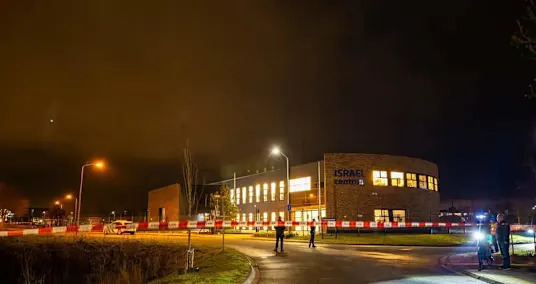
 - 2No injuries after blast at pro-Israel centre in the Netherlands
- 3Vote in favor of Your #1 4K television: Lucidity and Drenching Matter
- 4Iranian missile hit on Ne'ot Hovav factory leads to fear of chemical leakage
- 54 well known subjects in school



- Apollo's impatient old-timers are rooting for NASA's return to the moon with Artemis II launch
- Computerized Domains d: A Survey of \Vivid Undertakings\ Computer generated Reality Game
- A decade after Brazil’s deadly dam collapse, Indigenous peoples demand justice on the eve of COP30
- This Asian country is the next hot travel destination, and this is one of its best hotels
- 7 Powerful Techniques to Boost Efficiency with Your Cell Phone: A Far reaching Guide
- Experts who once backed 'shaken baby' science now fight to free imprisoned caregivers
- Transform the daily grind to make life more interesting – a philosopher shares 3 strategies to help you attain the good life
- Share your pick for the miniature headphones that you generally suggest!
- Instructions to Decide whether a Fender bender Legal counselor is Required for Your Particular Case